Mental health treatments don’t always work the same for everyone—and that can be frustrating, especially when someone has tried multiple medications without relief. What if there was a treatment that could work in hours instead of weeks?
That’s where ketamine therapy comes in.
Originally developed in the 1960s as an anesthetic used during surgeries, ketamine has recently gained attention for a completely different reason—its powerful and fast-acting effects on mental health. Today, doctors are using it in controlled medical settings to help people struggling with conditions like depression, anxiety, and PTSD, especially when other treatments haven’t worked.
Unlike traditional antidepressants that can take weeks to show results, ketamine works quickly by changing how the brain processes mood and emotions. Many patients report feeling relief within hours or days after treatment.
What Is Ketamine?
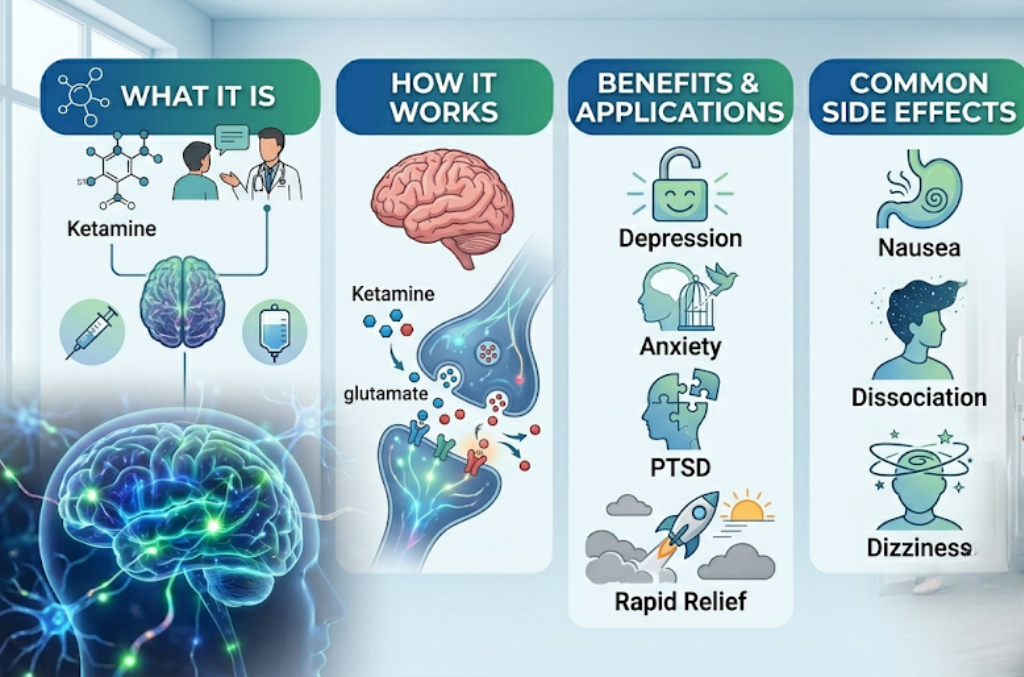
Ketamine is a type of medication known as a general anesthetic, which means it is used to make patients feel relaxed, sleepy, and free from pain during medical procedures or surgeries. Doctors have safely used ketamine in hospitals and clinics for many years.
How Does Ketamine Work as a Medicine?
Ketamine works by blocking pain signals in the brain, so the body doesn’t feel discomfort during a procedure. It also affects certain brain chemicals that control mood, memory, and perception.
Medical Use vs. Recreational Use
It’s important to understand that ketamine has two very different uses:
- Medical use:
In a controlled setting, ketamine is carefully given by professionals to ensure safety and effectiveness. This includes its use in anesthesia and now in mental health treatments. - Recreational use:
Ketamine is sometimes misused as a street drug, often called “Special K.” In this form, it can be dangerous and lead to serious side effects because it is not monitored or controlled.
Why Is Ketamine Important Today?
What makes ketamine unique is that, in low and controlled doses, it can affect the brain in a way that may help improve mood and reduce symptoms of depression and anxiety. This discovery is what led to the development of ketamine therapy.
What Is Ketamine Therapy?
Ketamine therapy is a medical treatment that uses low doses of ketamine to help improve mental health conditions such as depression, anxiety, and PTSD.
While ketamine has long been used as an anesthetic, doctors discovered that smaller, carefully controlled doses can have a powerful effect on mood and emotional well-being.
Ketamine vs. Ketamine Therapy
It’s important to understand the difference:
- Ketamine (the drug):
A medication used for anesthesia during surgeries. - Ketamine therapy:
A structured treatment where ketamine is used in a safe, clinical setting to support mental health.
Types of Ketamine Therapy
There are different ways ketamine can be given during therapy:
- IV (intravenous): Delivered through a vein (most common method)
- IM (intramuscular): Injected into a muscle
- Nasal spray: A prescription form used under medical supervision
- Oral (lozenges/tablets): Sometimes used in specific treatment plans
Each method is chosen based on the patient’s needs and the doctor’s recommendation.
What Is Ketamine-Assisted Psychotherapy (KAP)?
In many cases, ketamine is combined with talk therapy. This is called Ketamine-Assisted Psychotherapy (KAP).
During KAP:
- Patients receive ketamine in a controlled setting
- A therapist helps guide them through their thoughts and emotions
- The goal is to make it easier to process difficult feelings and create positive mental changes
Experts believe this works well because ketamine can make the brain more open and flexible, allowing therapy to be more effective.
How Does Ketamine Work in the Brain?
Ketamine works differently from most traditional mental health medications. Instead of slowly changing brain chemistry over weeks, it acts quickly on certain brain systems—often within hours.
The Role of Brain Chemicals (Neurotransmitters)
Your brain uses chemical messengers called neurotransmitters to send signals between cells. One of the most important of these is glutamate, which plays a key role in learning, memory, and mood.
Ketamine increases the activity of glutamate, which helps the brain communicate more effectively.
Creating New Neural Connections
One of the most powerful effects of ketamine is that it helps the brain form new connections, a process called neuroplasticity.
This means:
- The brain becomes more flexible
- Old, negative thought patterns can weaken
- New, healthier patterns can form
This is especially helpful for people with depression, where the brain may feel “stuck” in negative thinking.
Why It Works Faster Than Antidepressants
Most traditional antidepressants (like SSRIs) can take 2–6 weeks to show results because they slowly adjust brain chemistry.
Ketamine, on the other hand:
- Works on different brain pathways
- Acts much faster (sometimes within hours or days)
- Can provide relief even when other treatments haven’t worked
Changes in Thoughts and Emotions
During and after treatment, some people may notice:
- A shift in how they think about problems
- Reduced emotional pain
- A sense of mental “clarity” or calm
These effects can make it easier to engage in therapy and build healthier habits
What Conditions Can Ketamine Therapy Treat?
Ketamine therapy is mainly used to treat mental health conditions, especially when other treatments haven’t worked. This is often called treatment-resistant conditions.
1. Depression (Especially Treatment-Resistant Depression)
Ketamine is best known for helping people with depression who don’t respond to traditional medications.
- Can reduce symptoms quickly
- May help with severe or long-term depression
- In some cases, helps reduce suicidal thoughts
2. Anxiety Disorders
Ketamine therapy may also help people with different types of anxiety, including:
- Generalized anxiety disorder (GAD)
- Social anxiety
- Panic disorders
Many patients report feeling calmer and less overwhelmed after treatment.
3. Post-Traumatic Stress Disorder (PTSD)
For people with PTSD, ketamine may:
- Reduce intense emotional reactions
- Help process traumatic memories
- Improve overall mood and sleep
It is often combined with therapy for better results.
4. Chronic Pain Conditions
Ketamine isn’t just used for mental health—it can also help with chronic pain, such as:
- Nerve pain (neuropathic pain)
- Fibromyalgia
- Complex Regional Pain Syndrome (CRPS)
It works by changing how the brain processes pain signals.
5. Other Emerging Uses
Researchers are still studying ketamine for other conditions, including:
- Obsessive-compulsive disorder (OCD)
- Bipolar depression
- Substance use disorders
While results are promising, these uses are still being explored.
Who Is a Good Candidate for Ketamine Therapy?
Ketamine therapy can be very helpful for some people—but it’s not the right choice for everyone. A healthcare provider will always evaluate your condition before recommending this treatment.
Who Can Benefit the Most?
You may be a good candidate for ketamine therapy if you:
- Have depression that hasn’t improved with other medications
- Struggle with severe anxiety or PTSD
- Need fast relief from symptoms
- Have tried multiple treatments without success
Many patients who feel “stuck” with traditional treatments may find ketamine to be a new option.
Who Should Be Careful or Avoid It?
Ketamine may not be suitable for people with certain health conditions, such as:
- Uncontrolled high blood pressure
- Heart disease
- History of substance abuse
- Certain psychiatric conditions (like psychosis)
- Pregnancy or breastfeeding
Since ketamine can increase heart rate and blood pressure, these risks need to be carefully considered.
Benefits of Ketamine Therapy
Ketamine therapy has gained attention because of its fast and noticeable results, especially for people who haven’t found relief with traditional treatments.
1. Fast-Acting Relief
One of the biggest benefits of ketamine therapy is how quickly it works.
- Some people feel better within hours or days
- Much faster than traditional antidepressants, which can take weeks
- Helpful in urgent situations, such as severe depression
2. Helps When Other Treatments Fail
Ketamine is often used for treatment-resistant conditions, meaning:
- You’ve tried multiple medications without success
- Therapy alone hasn’t been enough
- Symptoms keep coming back
For many patients, ketamine offers a new path to relief.
3. Improves Mood and Emotional Well-Being
Patients often report:
- Feeling lighter and more positive
- Reduced negative thoughts
- Better emotional balance
This can make everyday life feel more manageable.
4. Supports Brain Healing (Neuroplasticity)
Ketamine helps the brain form new connections, which can:
- Break negative thought patterns
- Encourage healthier thinking habits
- Improve long-term mental health
This is one reason why it works well when combined with therapy.
5. Enhances Therapy Effectiveness
When paired with counseling or psychotherapy:
- Patients may open up more easily
- It becomes easier to process difficult emotions
- Therapy sessions can feel more productive
6. May Help with Multiple Conditions
In addition to depression, ketamine may also help with:
- Anxiety
- PTSD
- Chronic pain
This makes it a versatile treatment option.
Side Effects of Ketamine Therapy
Like any medical treatment, ketamine therapy can cause side effects. Most of them are mild and short-lasting, but it’s important to understand both the common and more serious risks.
Common Side Effects
These side effects are usually temporary and may go away within a few hours after treatment:
- Nausea
- Dizziness or lightheadedness
- Increased heart rate
- Increased blood pressure
- Drowsiness
- Feeling disconnected or “floaty”
- Changes in vision (blurred or double vision)
Many patients describe the experience as dream-like, which can feel unusual but is generally not harmful in a controlled setting.
Psychological Effects
Ketamine can also affect your thoughts and perception during the session:
- Disorientation or confusion
- Anxiety or nervousness
- Short-term hallucinations (seeing or hearing things differently)
These effects are typically monitored by healthcare providers and fade after the session ends.
Serious Side Effects (Less Common)
In rare cases, more serious side effects can occur and should be reported immediately:
- Allergic reactions (rash, swelling, trouble breathing)
- Very high blood pressure
- Trouble breathing (slow or shallow breathing)
- Liver-related issues (with long-term or frequent use)
Why Monitoring Is Important
Ketamine therapy is always done under medical supervision because:
- Your vital signs (heart rate, blood pressure) are closely monitored
- The dosage is carefully controlled
- Providers can respond quickly if any side effects occur
Risks and Safety Considerations
While ketamine therapy can be effective, it’s important to understand the potential risks and how to stay safe during treatment.
1. Drug Interactions
Ketamine can interact with other medications and substances, which may increase side effects or reduce safety.
Be cautious if you use:
- Alcohol
- Benzodiazepines (like alprazolam or diazepam)
- Opioids (pain medications)
- Sleep aids or muscle relaxants
- Certain antidepressants or seizure medications
Always share a full list of your medications, supplements, and habits with your healthcare provider.
2. Effects on Heart and Blood Pressure
Ketamine can temporarily:
- Increase heart rate
- Raise blood pressure
For most people, this is manageable. However, it can be risky for those with:
- Heart disease
- Uncontrolled high blood pressure
This is why monitoring during treatment is essential.
3. Mental Health Considerations
Although ketamine helps many mental health conditions, it may not be suitable for everyone.
It can sometimes:
- Increase confusion or disorientation
- Worsen symptoms in people with certain psychiatric conditions (like psychosis)
A proper mental health evaluation is necessary before starting therapy.
4. Risk of Misuse or Dependence
Ketamine has a history of recreational misuse. When used outside a medical setting:
- There is a risk of addiction or dependence
- Doses are not controlled
- Side effects can be dangerous
In a clinic, the risk is much lower because treatment is closely supervised.
5. Importance of a Clinical Setting
For safety, ketamine therapy should always be done in a licensed medical clinic where:
- Trained professionals administer the medication
- Your condition is monitored throughout
- Emergency care is available if needed
Avoid at-home or unregulated treatments unless specifically approved and supervised by a qualified provider.
6. Long-Term Safety
Research on long-term use is still ongoing. Some concerns with frequent or high-dose use include:
- Memory issues
- Liver problems
- Urinary tract issues
Ketamine Therapy vs Traditional Treatments
|
Factor |
Ketamine Therapy |
Traditional Treatments (Antidepressants & Therapy) |
|
Speed of Results |
Works within hours to a few days |
Takes 2–6 weeks to show effects |
|
How It Works |
Targets glutamate and helps form new brain connections (neuroplasticity) |
Works on serotonin and other chemicals to gradually improve mood |
|
Effectiveness |
Helpful for treatment-resistant cases |
May not work for everyone |
|
Treatment Method |
Given in controlled clinical sessions (IV, injection, nasal) |
Daily medication + regular therapy sessions |
|
Frequency |
Occasional sessions over weeks |
Daily use (medication) |
|
Side Effects |
Short-term: dizziness, nausea, disorientation |
Long-term: weight gain, fatigue, sexual side effects |
|
Onset of Relief |
Rapid relief, even in severe cases |
Gradual improvement over time |
|
Supervision |
Always done under medical supervision |
Medication often taken at home with periodic doctor visits |
|
Long-Term Use |
Limited sessions; ongoing research on long-term effects |
Commonly used for months or years |
|
Best For |
People who haven’t responded to other treatments |
First-line treatment for most mental health conditions |