NAD+ injections and IV drips: what the evidence does and doesn't show
NAD+ is essential to every cell. Whether an injection or IV drip of it raises cellular NAD+, slows aging or boosts energy in people has barely been tested in controlled trials.
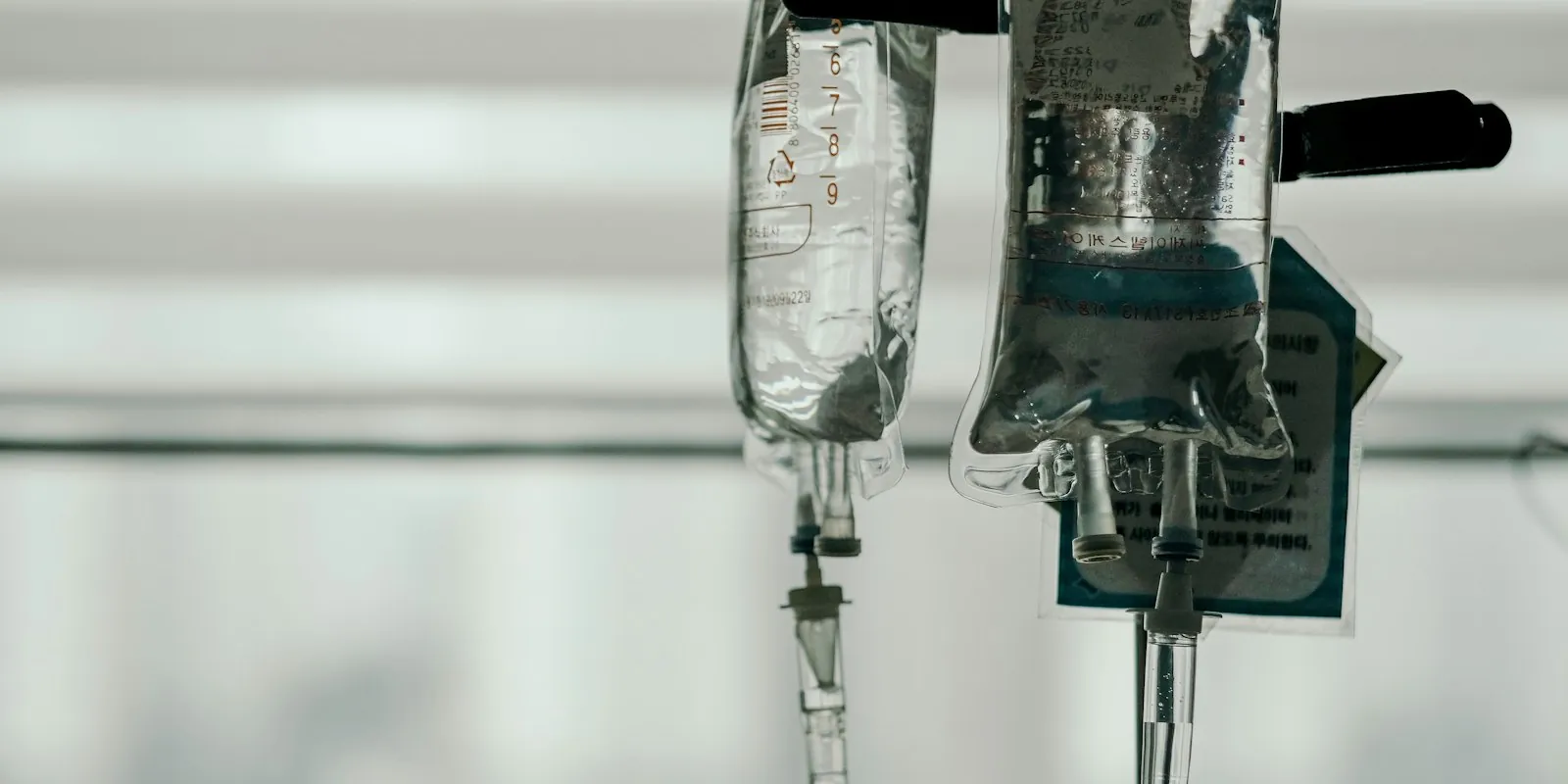
NAD+ is a real and essential molecule, and levels of it fall in some tissues with age in animal studies. What has not been shown is that injecting it or running it through an IV drip raises NAD+ inside your cells, slows aging, or improves energy, focus or recovery in people. The infusions are popular; the controlled human evidence for them is close to nonexistent.
The short version
- NAD+ (nicotinamide adenine dinucleotide) is a coenzyme every cell uses to turn food into energy and to run DNA repair and other enzymes. It is not a peptide, though it is often sold alongside them.
- There is no FDA-approved NAD+ injection or infusion. Products used in clinics are compounded and have not been evaluated by FDA for safety or effectiveness.
- Most human research involves oral precursors such as nicotinamide riboside (NR) and NMN, not injected NAD+. Those trials show NAD-related markers rise, with mixed effects on outcomes that matter.
- In 2024 FDA warned that some compounders were using food-grade NAD+ to make sterile injections, and it has received reports of severe chills, shaking and vomiting consistent with endotoxin contamination.
- Fast infusions commonly cause flushing, nausea, cramping and chest tightness. The setting and the person running the IV matter as much as the molecule.
What NAD+ does in the body
NAD+ shuttles electrons in the chemical reactions that release energy from food, which is why it turns up in every biochemistry textbook diagram of metabolism. It is also consumed by enzymes involved in DNA repair and in cell signaling, including the sirtuins and PARPs. Your body makes it from several building blocks, including vitamin B3 in its various forms, and constantly recycles it.
The longevity interest comes from animal work. In mice and other models, NAD+ levels in some tissues decline with age, and raising them with precursors has improved several markers of aging. That research is serious and ongoing. The leap is from "NAD+ declines in aging mice" to "an NAD+ drip will make me feel younger," and that leap has not been tested properly in people.
Worth knowing
Even the starting premise is less settled than it sounds. A 2026 study in Nature Metabolism measuring whole-blood NAD+ across several human cohorts reported that levels did not consistently fall with age. Blood is not the same as muscle or brain tissue, but it is a reminder that "your NAD+ is low because you are getting older" is a hypothesis, not a measured fact about you.
Injected or infused NAD+: the evidence gap
Here is the key problem. NAD+ is a large, electrically charged molecule. It is not expected to cross cell membranes intact. Outside cells, it is broken down quickly into smaller pieces, such as nicotinamide, which cells can then take up and rebuild into NAD+. If that is how infused NAD+ works, it may be an expensive, slow way of delivering a form of vitamin B3.
The human data on infusions are very limited. A small 2019 pilot study in Frontiers in Aging Neuroscience infused NAD+ into healthy volunteers and measured what happened in blood and urine. It found NAD+ was cleared from plasma quickly, with a pattern of breakdown products suggesting it was metabolized outside cells. That was a study of how the body handles the drug, not of whether it improves anything.
A 2026 systematic review in Ageing Research Reviews (Gallagher and Emmanuel) gathered intervention studies of NAD+ and its precursors for anti-aging and wellness. As summarized by reviewers at Science-Based Medicine, it found no eligible controlled outcome trials of intravenous, intramuscular or subcutaneous NAD+ for these uses. The human trials that did exist were mostly of oral precursors, and nearly all carried some risk of bias.
What the oral precursor trials show
Trials of NR and NMN, generally small and lasting weeks to a few months, consistently show that blood levels of NAD-related compounds rise. Effects on muscle strength, insulin sensitivity, blood pressure, sleep or fatigue have been mixed, with some small positive findings and many null ones. These supplements appear well tolerated in the short term. That is a modest result, and it is evidence about pills, not drips. Our article on peptides and longevity covers why surrogate markers so often fail to predict real benefit.
Safety and regulatory status
There is no FDA-approved NAD+ product for injection or infusion. Clinics that offer it use compounded preparations from 503A pharmacies or 503B outsourcing facilities, and compounded drugs are not FDA-approved. Advocacy and industry sources disagree on exactly how NAD+ is classified for compounding, so we are not stating a specific bulk-list status here. A prescriber should be able to name the pharmacy, its type, and its legal basis for compounding the product. Our regulatory status guide explains what to ask.
Ingredient quality
In an alert last updated in October 2024, FDA said it was aware of compounders buying food-grade NAD+ from repackagers and using it to make sterile injectable products. FDA stated that food-grade ingredients are not suitable for sterile compounding without appropriate processing, because of the risk of microbial and endotoxin contamination. It reported receiving adverse event reports after NAD+ injections including severe chills, shaking, vomiting and fatigue, some requiring medical treatment. Recalls of injectable NAD+ over endotoxin and sterility concerns followed in 2025 and 2026, according to FDA enforcement reports covered by trade press.
Infusion reactions
Clinics that run NAD+ drips commonly report that a fast infusion causes flushing, nausea, abdominal cramping, a feeling of chest pressure, headache or anxiety, which is why infusions are often run over several hours. These reactions usually ease when the rate is slowed, but they are a sign of how much the body notices this molecule, not a sign that it is working.
The setting
Any IV carries risks that have nothing to do with what is in the bag: infection, vein irritation, fluid overload in people with heart or kidney disease, and air getting into the line. In July 2026, a 27-year-old woman died after an NAD+ infusion at a wellness center in the Bronx. According to news reports, the medical examiner attributed her death to an air embolism, and the person giving the infusion was not licensed to practice medicine in New York. That case is about who was running the IV, not NAD+ itself, and it is a stark reminder that an IV is a medical procedure.
Be careful here
Before any IV or injection, ask who is placing the line and what their license is, who supervises them, which pharmacy made the product, and what happens if you react. If a mobile drip service or spa cannot answer those questions, do not let them start. People with heart failure, kidney disease or a history of reactions should not have elective infusions without a clinician who knows their history.
NAD+ for athletes
NAD+ itself is not on the WADA Prohibited List. Intravenous infusions are a different matter. Under WADA's rules, IV infusions or injections of more than 100 mL in a 12-hour period are prohibited at all times unless received during hospital treatment, surgery or clinical investigation, or covered by an exemption. Many NAD+ drips exceed that volume. Tested athletes should check with their anti-doping organization first.
Is NAD+ therapy worth trying?
If the goal is more energy, better focus or healthier aging, the evidence for NAD+ infusions is not strong enough to say they help, and the costs and risks are real. The things that reliably move those outcomes, such as treating sleep apnea, addressing iron deficiency or thyroid problems, adjusting medications and building strength, are less exciting and much better studied.
If you are curious about NAD+ or already using it, it is worth talking through with a clinician who will review your history and be straight about the evidence. Our peptide and wellness consultations start there, and our article on glutathione injections covers another drip-bar favorite with a similar evidence gap.
Questions patients ask us
What is NAD+?
NAD+, nicotinamide adenine dinucleotide, is a coenzyme found in every cell. It carries electrons in the reactions that release energy from food and is used by enzymes involved in DNA repair and cell signaling. The body makes it from forms of vitamin B3 and recycles it constantly. It is not a peptide, though clinics often sell it alongside them.
Does NAD+ IV therapy work?
There is little evidence that it does for energy, focus or anti-aging. A 2026 systematic review found no eligible controlled outcome trials of intravenous, intramuscular or subcutaneous NAD+ for those uses. Infused NAD+ is cleared from blood quickly and is thought to be broken down outside cells, so whether it raises NAD+ inside cells is uncertain.
Is NAD+ FDA-approved?
No NAD+ injection or infusion is FDA-approved. Clinics use compounded preparations from 503A pharmacies or 503B outsourcing facilities, and compounded drugs are not FDA-approved. Sources disagree on exactly how NAD+ is classified for compounding, so ask your provider which pharmacy prepares it and what its legal basis is.
What are the side effects of an NAD+ infusion?
Clinics commonly report flushing, nausea, abdominal cramping, chest pressure, headache and anxiety when an infusion runs quickly, which is why drips are often given over several hours. FDA has also received reports of severe chills, shaking, vomiting and fatigue after NAD+ injections that were consistent with endotoxin contamination. Any IV also carries infection and vein risks.
Are NAD+ injections better than an IV drip?
Neither route has controlled trial evidence for wellness or anti-aging benefits, so there is no basis for calling one better. Injections are quicker and lower volume, while drips take hours. Both depend on a sterile, properly sourced product, and both deliver a molecule that appears to break down quickly outside cells.
Are NAD+ supplements like NR and NMN better studied?
Yes, somewhat. Oral precursors such as nicotinamide riboside and NMN have been tested in small human trials that consistently show NAD-related markers rise in blood. Effects on strength, metabolism, sleep or fatigue have been mixed. They appear well tolerated short term, but rising markers have not translated into clear health benefits so far.
Why did FDA warn about NAD+?
In an alert last updated in October 2024, FDA said some compounders were buying food-grade NAD+ and using it to make sterile injectable products. FDA stated that food-grade ingredients are not suitable for sterile compounding without appropriate processing because of contamination risk, and reported adverse events consistent with excessive endotoxin levels.
Who should not get an NAD+ IV?
People with heart failure or significant kidney disease, who may not handle extra IV fluid well, should not have elective infusions without a clinician who knows their history. The same applies if you are pregnant or breastfeeding, have had reactions to infusions before, or take several medications. Ask who is placing the line and what their license is.
Is NAD+ allowed for athletes?
NAD+ itself is not on the WADA Prohibited List, but the delivery method matters. WADA prohibits IV infusions or injections of more than 100 mL in a 12-hour period at all times, unless given during hospital treatment, surgery or clinical investigation, or covered by an exemption. Many NAD+ drips exceed that volume, so check before booking.
What should I ask before getting an NAD+ drip?
Ask who will place the IV and what their license is, who supervises them, which pharmacy made the product and whether it is a 503A pharmacy or 503B outsourcing facility, how the infusion rate is chosen, and what happens if you react. If a spa or mobile service cannot answer clearly, do not let them start.
Talk to a licensed clinician
Reading about a treatment is not the same as knowing whether it fits your history. A consultation is a conversation about your own situation — not a sales call, and not a promise of any outcome.